Advancing Sustainable Refrigerant Recovery with Membrane Technology
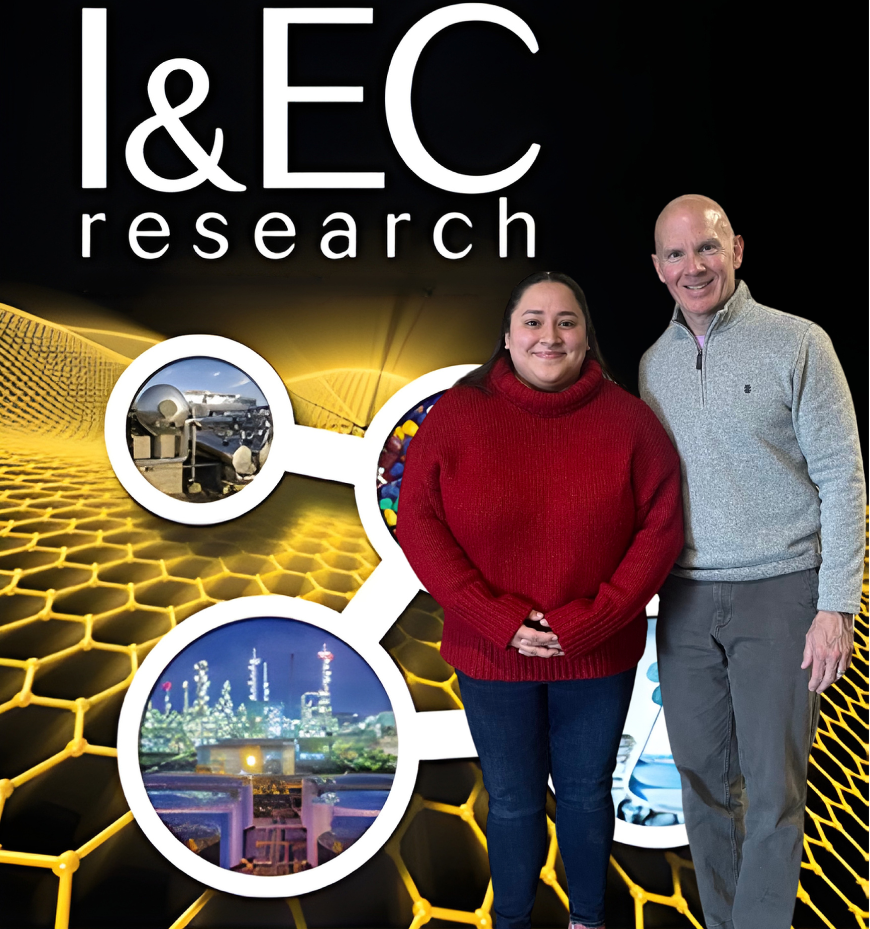
As the world works to reduce greenhouse gas emissions and transition away from high–global-warming-potential refrigerants, new separation and recycling technologies are becoming increasingly critical. A recent publication in Industrial & Engineering Chemistry Research highlights a promising path forward, leveraging membrane-based separation technologies to recover and reuse hydrofluorocarbon (HFC) refrigerants more efficiently and sustainably.
Authored by Yuniva Mendoza‑Apodaca, Mark B. Shiflett, and collaborators, the review article “Membrane Technology for Hydrofluorocarbon Refrigerant Separation” provides a comprehensive examination of how advanced membrane systems could transform refrigerant recovery, helping industry meet environmental regulations while reducing energy use and cost.
Why Refrigerant Separation Matters
Refrigerants are essential to modern life, enabling cooling for homes, food systems, data centers, and industrial processes. However, many commonly used HFCs have high global warming potentials, and refrigerant mixtures are often difficult to separate once used. Traditional methods such as distillation are energy intensive and, in some cases, ineffective due to azeotropic or near-azeotropic behavior, where components boil at nearly the same temperature.
As international and national regulations continue to phase down high-impact refrigerants, there is growing demand for technologies that make refrigerant recovery and reuse both technically feasible and economically viable.
Membranes as a Sustainable Alternative
The authors’ review highlights membrane-based separations as a non-thermal, energy-efficient alternative to conventional techniques. Unlike distillation, membranes rely on selective transport properties, such as differences in solubility and diffusivity, to separate components without requiring phase changes or large energy inputs.
The article explores several membrane approaches, including:
- Polymeric membranes, widely studied for their processability and tunable chemistry
- Mixed-matrix membranes, which combine polymers with inorganic fillers to improve selectivity and permeability
- Inorganic membranes, offering high thermal and chemical stability
By examining how refrigerant molecules interact with different membrane materials, the review connects fundamental transport mechanisms to real-world process performance.
Addressing Real-World Challenges
One of the review’s key contributions is its discussion of the practical challenges facing membrane deployment in refrigerant separation. These include:
- Molecular similarity among refrigerants
- Plasticization and chemical degradation of membrane materials
- Trade-offs between permeability, selectivity, and long-term durability
Rather than treating membranes in isolation, the article emphasizes the importance of integrating material design with process engineering, ensuring that promising laboratory results can scale to industrial systems.
Supporting Environmental Goals and Policy Transitions
The work comes at a critical moment. As regulatory frameworks increasingly restrict the production and use of high–global-warming-potential refrigerants, industries need effective recycling and recovery solutions. Membrane technologies offer a pathway to extend the lifecycle of existing refrigerants while supporting compliance with evolving environmental standards.
A Milestone for Collaborative Research
The publication also marks a significant professional milestone for Yuniva Mendoza‑Apodaca, representing her first first‑author paper. Conducted with the Shiflett Research Group at the University of Kansas , Wonderful Institute for Sustainable Engineering (WISE) and U.S. National Science Foundation funded Engineering Research Center, Environmentally Applied Research Technology Hub (EARTH), the work reflects a strong collaboration between emerging researchers and established leaders in sustainable separations science.
This research aligns closely with both EARTH and WISE missions to advance sustainable technologies that protect the environment without compromising performance or reliability.
Looking Ahead
By synthesizing recent advances, identifying knowledge gaps, and outlining future research directions, this review provides a roadmap for continued innovation in refrigerant recovery. As membrane materials and process designs continue to evolve, their role in sustainable cooling technologies is poised to expand, supporting climate goals while meeting the demands of modern infrastructure.
Learn More
Wed, 03/18/2026
author
Media Contacts

Environmentally Applied Refrigerant Technology Hub (EARTH)