Graduate Research Advances Sustainable Refrigerant Separation Through Machine Learning and Molecular Simulation
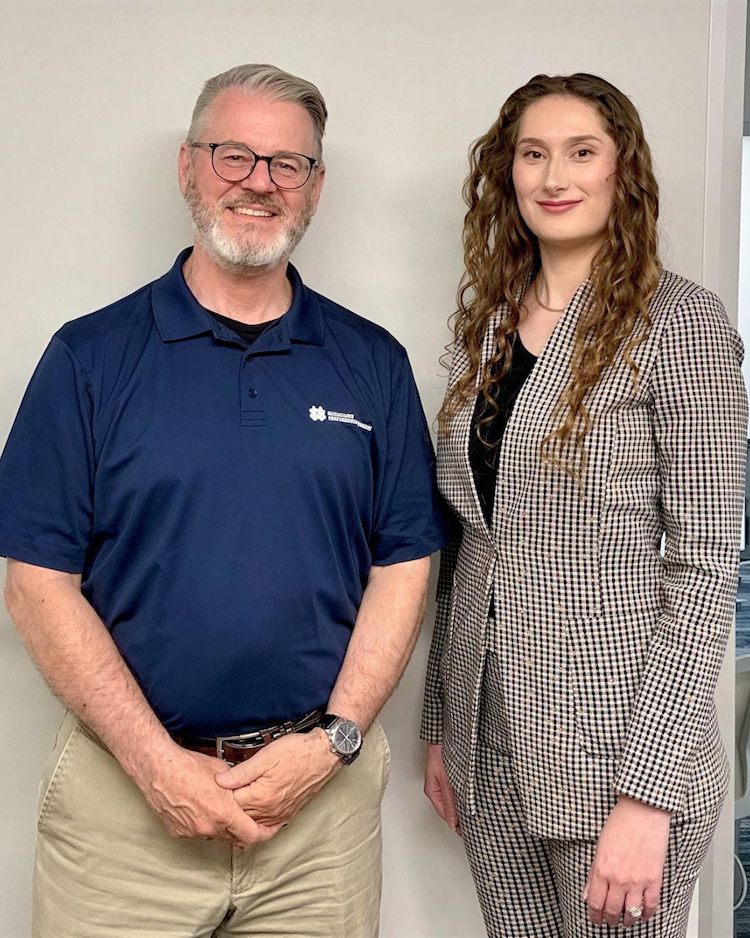
As industries around the world work to reduce greenhouse gas emissions, researchers are searching for innovative ways to replace or recycle compounds that contribute to the atmospheric impact of emissions. One recent doctoral thesis has helped advance that effort by combining machine learning, optimization, and molecular simulation to improve the prediction of critical chemical properties used in refrigerant separation processes.
Montana Carlozo recently completed a thesis titled Property Predictions Using Machine Learning and Optimization Enhanced Molecular Simulation, which addresses a major challenge facing the refrigeration, heating, ventilation, and air-conditioning industries.
Hydrofluorocarbons (HFCs) have long been used in commercial, residential, and industrial cooling systems. While effective, many HFCs possess high global warming potentials (GWPs), making them significant contributors to climate change. As governments worldwide implement regulations to phase out these compounds, industries face a difficult problem: many HFCs exist in mixtures that are extremely challenging to separate using conventional techniques.
Current research explores the use of ionic liquids and deep eutectic solvents as promising alternatives for extractive distillation processes capable of separating HFC mixtures. However, designing these separation technologies requires accurate physical property data for refrigerants, solvents, and their mixtures, which are often expensive and time-consuming to obtain experimentally.
To overcome this limitation, the thesis focused on improving molecular simulation methods used to predict physical properties. Molecular simulations rely on force field models that describe how molecules interact, but creating accurate force fields has traditionally required extensive manual tuning by experts.
The work introduced a systematic, data-driven framework for force field development and optimization. Machine learning techniques were used to determine the optimal structure of transferable force fields for thirteen hydrofluorocarbon refrigerants while Gaussian process surrogate models accelerated the optimization of key Lennard-Jones parameters. The approach enabled rapid and informed force field development while reducing reliance on traditional trial-and-error methods.
Building on this success, the framework was extended to six solvents commonly studied for deep eutectic solvent applications and electrolyte systems. The research demonstrated that carefully selected experimental data could be used to improve model transferability by effectively decoupling key force field parameters during optimization.
The thesis also contributed new advances in Bayesian optimization methodology. By leveraging Gaussian process surrogate models directly within the optimization process, the newly developed techniques showed improved consistency in locating global optima when compared with existing derivative-free optimization methods.
Taken together, these contributions provide new tools for accelerating molecular model development and improving the predictive capabilities of simulation-driven engineering. The methods developed in this work have potential applications not only in refrigerant separation but also across a wide range of chemical and materials design challenges where accurate property prediction is essential.
Looking ahead, Dr. Carlozo plans to transition into the field of intellectual property and patent law and is currently seeking opportunities as a patent agent on the East Coast; those interested in connecting professionally can learn more through LinkedIn: https://www.linkedin.com/in/montana-carlozo/
Thu, 06/18/2026
author
Media Contacts

Environmentally Applied Refrigerant Technology Hub (EARTH)

Environmentally Applied Refrigerant Technology Hub (EARTH)